Physical Address
304 North Cardinal St.
Dorchester Center, MA 02124
Physical Address
304 North Cardinal St.
Dorchester Center, MA 02124


Feeling mentally exhausted and overstimulated every night? These 7 bedtime routine ideas for stress relief at night can help calm your nervous system, improve sleep, and make your evenings feel peaceful again without complicated wellness routines.
You finally finish everything for the day, crawl into bed exhausted, and somehow your brain immediately decides it is time to panic about emails, parenting, bills, random health symptoms, and that awkward thing you said three years ago. Meanwhile your body feels tired enough to melt into the mattress but your mind acts like it just drank six espresso shots.
That used to happen to me almost every night.
I thought stress was just part of being an adult with responsibilities. Work during the day, anxiety at night, repeat forever. Very inspiring lifestyle honestly.
The problem was my body never fully relaxed. Even when I rested, I stayed mentally tense. My sleep quality got worse, my patience disappeared, and my mood started swinging harder than my daughter on a playground.
So I stopped trying complicated wellness routines that felt more stressful than helpful. Instead, I focused on small comforting habits before bed.
These 7 bedtime routine ideas for stress relief at night helped me calm my nervous system, sleep better, and stop feeling emotionally ambushed by bedtime every evening 🙂

Stress feels louder at night because distractions disappear. During the day you stay busy enough to avoid your thoughts. Then bedtime arrives and suddenly your brain wants to host a full emergency meeting.
Stress at night can affect:
Your body needs calming signals before sleep. Otherwise your nervous system keeps acting like danger is hiding behind the laundry pile.
Takeaway: A calming bedtime routine helps reduce stress and prepares your body for deeper rest.

I started drinking herbal tea at night mostly because I needed a break from caffeine and stress eating.
Unexpectedly, it became one of the calmest parts of my day.
Making tea forced me to slow down for a few minutes instead of rushing around cleaning random kitchen counters at 10 PM like my life depended on it.
A few favorites:
Warm drinks naturally feel soothing. Herbal teas also support relaxation without making your body feel heavy or overstimulated.
FYI, simply sitting quietly with a warm mug can calm your nervous system more than another hour of doomscrolling ever will.
Takeaway: Herbal tea creates a comforting nighttime ritual that supports stress relief and relaxation.
I used to scroll social media before bed thinking it helped me unwind. Meanwhile my brain absorbed stressful news, parenting debates, productivity advice, and strangers fighting over nonsense online.
Shockingly, this did not improve my stress levels.
I started putting my phone down about 30 minutes before sleep.
A few simple tricks helped:
My brain stopped feeling overstimulated before bed. Falling asleep became easier once I stopped feeding my nervous system endless chaos every night.
Takeaway: Less screen time before bed helps reduce mental stress and improve sleep quality.

For a while, showers became rushed survival tasks squeezed between work and bedtime.
Then I started slowing down during nighttime showers. Nothing dramatic. Just warm water, quieter thoughts, and a few uninterrupted minutes without someone asking where their charger disappeared.
A few things made it feel even better:
Hot showers help relax tense muscles and calm the body physically. Stress often sits in your shoulders, neck, and jaw longer than you realize.
Honestly, clean pajamas after a long stressful day feel emotionally healing sometimes :/
Takeaway: A warm nighttime shower helps release physical tension and calm the nervous system.

Every unfinished task suddenly feels urgent once your head hits the pillow.
Journaling helped me stop mentally carrying every tiny responsibility into bed each night.
Nothing fancy.
Usually things like:
Writing thoughts down creates mental separation. Your brain stops gripping every unfinished concern quite so tightly.
IMO, adulthood is mostly just trying to convince your nervous system that replying to emails can wait until tomorrow.
Takeaway: Journaling helps clear mental stress and creates emotional breathing room before sleep.
I never realized how harsh overhead lighting felt at night until I started using softer lamps instead.
Now bright kitchen lights after 9 PM feel personally aggressive.
Simple options:
Dim lighting signals to your body that bedtime is approaching. Your brain responds surprisingly fast to environmental changes.
Plus cozy lighting somehow makes folding laundry slightly less emotionally offensive.
Takeaway: Softer nighttime lighting helps your body relax and prepare for sleep naturally.
I carry stress in my shoulders constantly. By nighttime my whole body feels tense even when I mentally try to relax.
Gentle stretching before bed helped release some of that built up tension.
Nothing complicated.
A few favorites:
Stretching signals to your body that the stressful part of the day is officially ending.
Also, moving your body slowly feels surprisingly grounding after staring at screens and rushing around all day.
Takeaway: Gentle stretching helps release tension and supports physical and emotional relaxation.
Some bedtime routines online look exhausting. Full skincare systems, meditation apps, journaling, yoga, supplements, tea rituals, gratitude exercises, and apparently waking up at sunrise smiling peacefully.
Meanwhile most of us just want enough rest to function like decent humans tomorrow.
Most nights mine looks like this:
Simple works better for me.
Tiny calming habits repeated regularly help your nervous system trust that nighttime is safe and restful.
You do not need perfection. You need comfort and consistency.
Takeaway: A simple realistic bedtime routine supports stress relief more effectively than complicated routines you never follow.
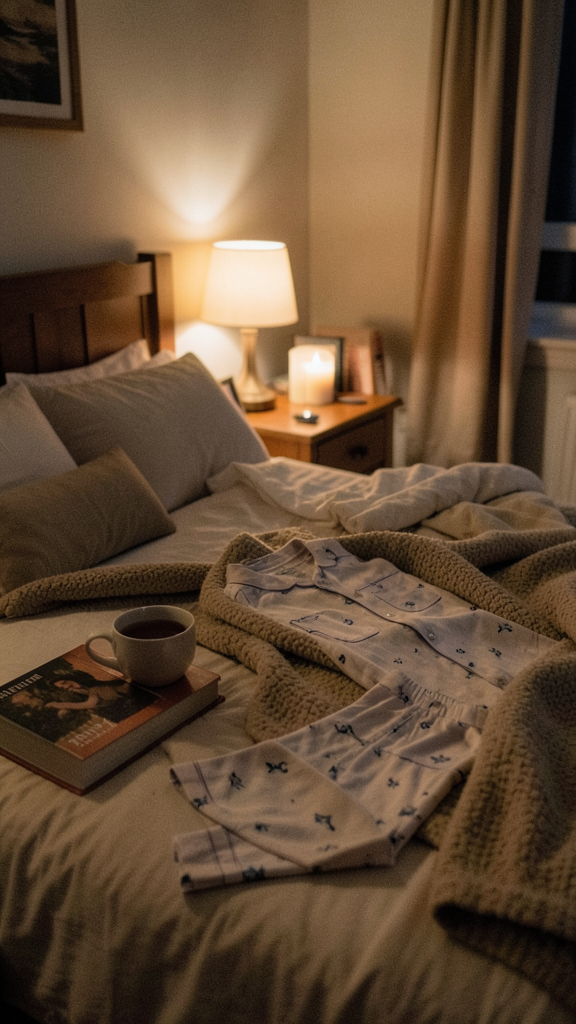
Once my evenings became calmer, I noticed:
The biggest difference honestly was emotional. Bedtime stopped feeling like a stressful transition and started feeling comforting again.
That shift changes a lot.
Stress does not disappear magically at bedtime. Your body needs small calming habits to help shift out of survival mode and into rest.
These 7 bedtime routine ideas for stress relief at night work because they focus on comfort, consistency, and realistic habits instead of perfection.
Start small. Maybe herbal tea tonight. Maybe less scrolling tomorrow night. Tiny changes still matter.
And honestly, your nervous system deserves a softer ending to the day than panic scrolling and stress spirals in the dark.