Physical Address
304 North Cardinal St.
Dorchester Center, MA 02124
Physical Address
304 North Cardinal St.
Dorchester Center, MA 02124


A simple, honest guide to fixing damaged skin that reacts to everything, with real-life tips that actually help your barrier heal without overcomplicating your routine.
Your face stings when you apply moisturizer. Not a fancy active, just basic moisturizer. That was me, standing in my bathroom, wondering how my skin turned into a drama queen overnight.
It felt tight, red, and weirdly shiny but also flaky. I kept adding more products, thinking I needed stronger solutions. Turns out I was doing the exact opposite of what my skin needed.
If your skin suddenly reacts to everything, looks dull, or feels like sandpaper, your skin barrier is probably waving a white flag. Let’s fix that.
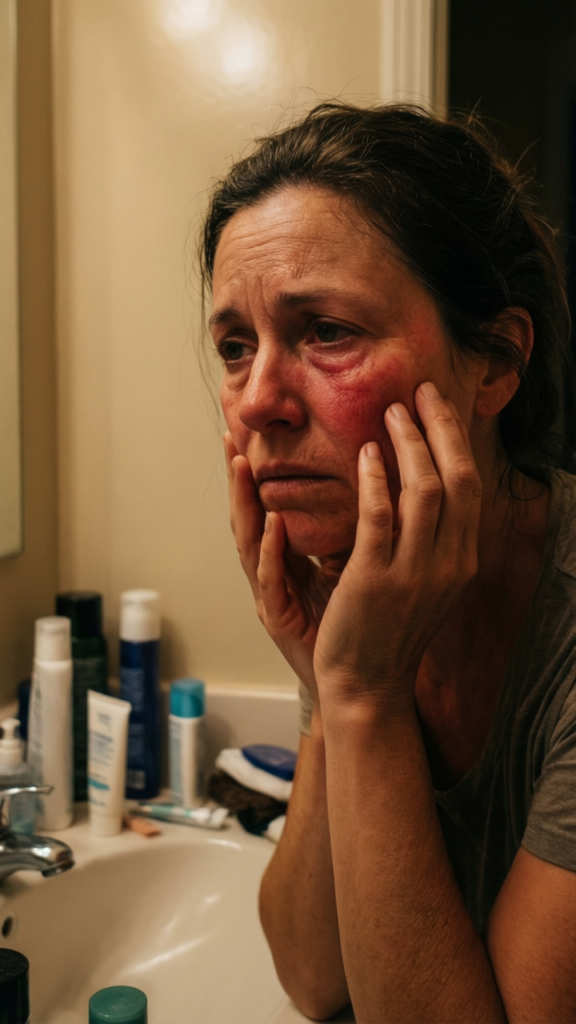
Your skin barrier is the outermost layer of your skin. It keeps the good stuff in and the bad stuff out.
When it’s healthy, your skin feels smooth, hydrated, and calm. When it’s damaged, everything goes sideways fast.
I ignored these signs at first. I thought I just needed a better serum. Nope. My barrier was wrecked.
Takeaway: If your skin reacts to everything, stop adding more and start repairing.
I used to think exfoliation solved everything. Texture? Exfoliate. Acne? Exfoliate. Bad mood? Probably exfoliate.
That mindset destroyed my skin barrier.
Your skin doesn’t need to be polished daily. It’s not a kitchen countertop.
Takeaway: Less exfoliation equals more healing. Your skin needs a break, not a scrub session.
Harsh cleansers strip your natural oils. Once those are gone, your barrier struggles to protect itself.
I swapped my foaming cleanser for a gentle, low-pH one. It felt boring. It worked.
If your face feels tight after washing, your cleanser is too aggressive.
Takeaway: A gentle cleanser supports healing instead of starting a daily fight with your skin.
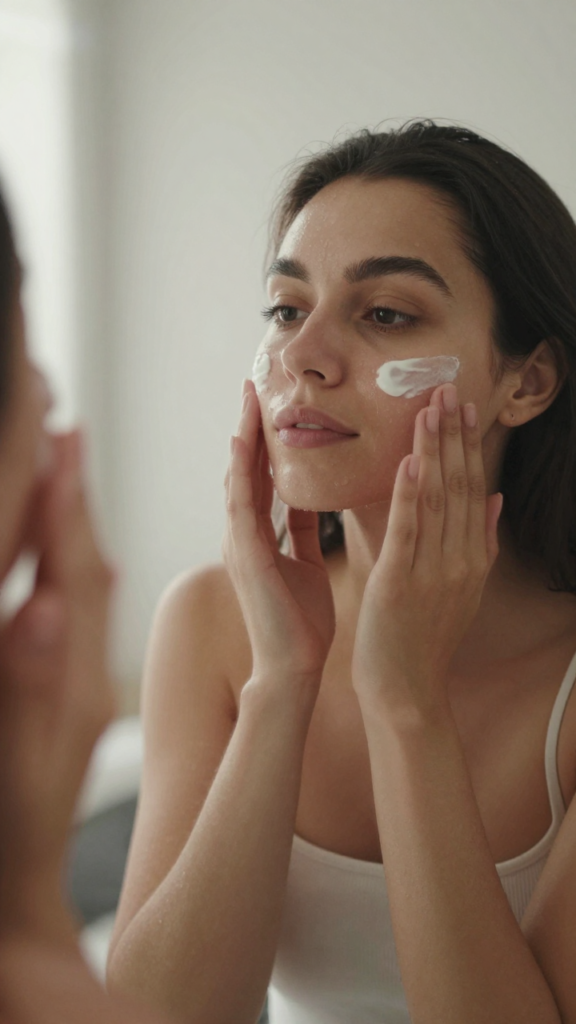
I used to apply moisturizer like it was optional. Quick dab, done. Big mistake.
When your barrier is damaged, moisturizer becomes your best friend.
These ingredients rebuild your skin’s structure. Think of them as bricks and mortar.
Apply moisturizer while your skin is slightly damp. It locks in hydration better.
Takeaway: Moisturizer is not just hydration. It is repair. Use it generously and consistently.
Retinol, vitamin C, acids. I loved them all. My skin did not.
When your barrier is compromised, actives can make things worse fast.
Stick to a simple routine for a while. Cleanser, moisturizer, sunscreen. That’s it.
It feels boring, I know. But your skin needs calm, not excitement.
Takeaway: Healing mode means fewer actives and more patience.
Sun exposure weakens your skin barrier even more. Skipping sunscreen slows down recovery.
I used to think sunscreen was optional indoors. Turns out UV rays don’t care about my plans.
A damaged barrier plus sun damage is a terrible combo. Trust me.
Takeaway: Sunscreen protects your progress. Don’t skip it, even on lazy days.
Hot water feels amazing. Your skin disagrees.
It strips natural oils and worsens dryness. I learned this the hard way during long, steamy showers that left my skin feeling like paper.
Small changes make a big difference over time.
Takeaway: Treat your skin gently, even during basic routines like showering.

This one hurts a little. There’s no overnight fix.
I wanted instant results. My skin needed weeks.
Consistency matters more than perfection. Stick to a simple routine and give it time.
And yes, you might feel tempted to try a new trending product halfway through. Don’t. Your skin is not a testing lab 🙂
Takeaway: Healing takes time. Stay consistent even when progress feels slow.
When my skin barrier was at its worst, I simplified everything.
Morning:
Night:
That’s it. No serums. No treatments. No experiments.
It felt too simple to work. But within two weeks, the redness calmed down and the stinging stopped.
FYI, simple routines often win. Complicated ones just look cooler on social media.
Even with good intentions, it’s easy to mess things up.
I did all of these. My skin paid the price.
Takeaway: Pay attention to your skin. It tells you what it needs if you actually listen.
Fixing a damaged skin barrier is not glamorous. It’s slow, simple, and sometimes frustrating.
But once your skin heals, everything changes. Products work better. Your skin looks healthier. And you stop fearing your own skincare routine.
If you remember nothing else, remember this: calm skin comes from consistency, not complexity.
Start small. Be gentle. And give your skin the time it deserves.